
Uncategorised
How to Create Baby Keepsakes That Last
Jul
The tiny hospital wristband, the first pair of booties, the card from a baby shower you meant to put somewhere safe – these are often the things parents reach for years later. If you are wondering how to create baby keepsakes, the best place to start is not with quantity, but with meaning. A good keepsake does not need to be elaborate. It simply needs to capture a moment you know will matter.
For most families, the challenge is choosing something personal without creating clutter. New baby gifts arrive quickly, storage space can be limited, and good intentions often turn into a drawer full of loose bits and bobs. The most lasting baby keepsakes are the ones that are easy to store, clearly linked to a memory, and made to hold up well over time.
How to create baby keepsakes with real meaning
A keepsake works best when it marks a specific milestone, rather than trying to represent everything at once. That might be a baby’s name and birth date on a keepsake box, a framed photo from their first Christmas, or a small engraved token given at a christening. When the item has a clear connection to one memory, it tends to feel more special and is much more likely to be kept.
It also helps to think about who the keepsake is really for. Some pieces are mainly for parents now, such as memory boxes, baby photo frames, or engraved nursery items. Others are better suited to the child later on, such as a personalised jewellery box, a small engraved trinket, or a keepsake keyring they may appreciate when they are older. If you know the purpose from the start, choosing becomes much easier.
Sentiment matters, but practicality matters too. Delicate handmade items can be lovely, though they are not always ideal if you want something durable and easy to revisit over the years. Personalised engraved gifts often work well because they combine emotional value with a more permanent finish. Names, dates, weights, times of birth, or a short message can turn an everyday item into something far more memorable.
Start with the milestones you want to remember
If you are not sure where to begin, focus on the first-year moments that naturally lend themselves to keepsakes. Birth is the obvious starting point, but there are plenty of others: naming days, christenings, first birthdays, first Christmas, and even smaller family milestones such as the first holiday or first trip to grandparents.
Choosing just a handful of moments can stop the process from becoming overwhelming. Many parents find it more useful to create one keepsake for each major stage rather than trying to preserve every tiny detail. That approach keeps things meaningful and manageable.
Birth details and arrival gifts
Birth keepsakes remain popular for good reason. A baby’s full name, date of birth, weight, and time of arrival are details families rarely forget, yet they still feel especially precious when displayed properly. Engraved photo frames, keepsake boxes, and decorative plaques all suit this kind of information well.
This is also where personalised gifting works particularly well for friends and relatives. A thoughtful engraved piece feels far more considered than a generic newborn present, and it gives parents something they are likely to keep long after the baby clothes have been packed away.
First celebrations
A baby shower, christening, naming ceremony, or first birthday can all be marked with a keepsake that reflects the occasion. The key is matching the item to the event. A christening might call for a more traditional engraved gift, while a first birthday could suit a memory box or framed photograph with a personal message.
There is no single right choice here. Some families prefer classic silver-look keepsakes or engraved glass, while others want something simple, affordable, and easy to display in the home. It depends on the occasion and the family’s style.
Choose baby keepsakes that are easy to keep
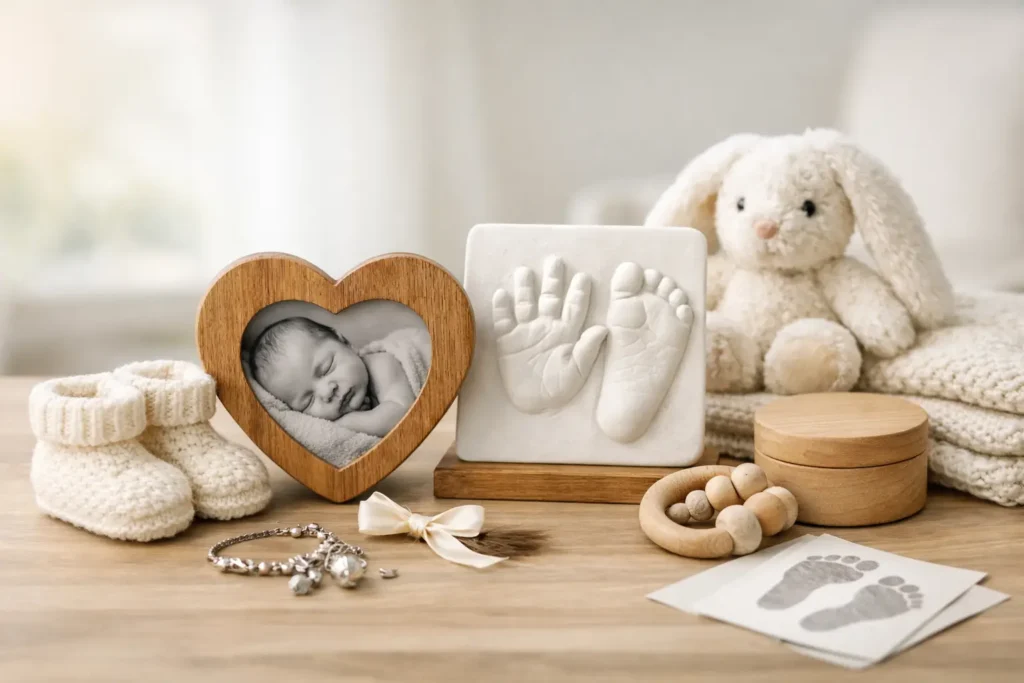
The best keepsakes are not always the biggest or most decorative. In fact, smaller items often stand the test of time better because they are easier to store safely and bring out again in future. A memory box is especially useful because it gives a home to the little things that might otherwise get lost – first mittens, scan photos, hospital tags, congratulations cards, and tiny socks.
If you are buying for new parents, this practical side matters. A keepsake should feel special, but it should also fit into real life. Something compact, personal, and ready to display or store is usually a safer choice than a large novelty item that may not suit the nursery or the family home.
Durability is worth thinking about as well. Materials such as wood, slate, glass, and metal each offer a different look, but all can work beautifully if the engraving or printed personalisation is clear and thoughtfully done. What matters most is that the item still feels presentable years from now.
Personalisation ideas that make a keepsake feel special
Knowing what to add can be the hardest part. Too little text can feel plain, while too much can make a keepsake look crowded. In most cases, simple details work best.
A baby’s name is the natural starting point. Add a birth date for context, and then decide whether the item has space for one more detail such as time of birth, weight, or a short line like “Welcome to the world” or “Loved from the very start”. If the keepsake is for a christening or birthday, the date of the celebration and a brief message are often enough.
Tone matters here as well. Some families want something traditional and timeless. Others prefer a more playful touch. Neither is wrong, but it is worth considering whether the item is intended for a nursery now or for the child to appreciate later in life. A very cute message may suit one moment, while a cleaner engraved style often has broader long-term appeal.
Handmade or personalised – which is better?
This is where it really depends on what you want from the keepsake. Handmade memory crafts such as handprint kits, scrapbooks, and baby journals can be deeply personal because they capture direct participation from the parents. They are excellent if you have the time and want a project to work on at home.
The trade-off is that handmade keepsakes can be messier, less durable, or harder to complete when life with a newborn is already busy. Personalised ready-made keepsakes are often easier. They still feel thoughtful, but they remove the pressure of starting from scratch. For many families, a combination works best – perhaps a handcrafted memory book kept inside an engraved box, or printed baby photographs displayed in a personalised frame.
That balance is often the most realistic option. You get the warmth of personal memories without adding another unfinished project to an already full list.
How to create baby keepsakes as gifts
If you are shopping for someone else, think first about usefulness. New parents usually appreciate gifts that are sentimental but still easy to place, use, or store. Personalised photo frames, keepsake boxes, engraved plaques, and small decorative items tend to land well because they suit different homes and do not require much effort from the recipient.
Try to avoid guessing too wildly at style. If you are unsure whether the parents prefer classic, modern, rustic, or minimal designs, a clean personalised piece is usually the safest route. Neutral finishes and simple engraving often have the broadest appeal.
It is also wise to consider timing. A keepsake intended for a baby shower may need a different message from one given after the birth, when all the final details are known. If you are ordering a personalised item online, double-check spelling, dates, and delivery times before placing the order. That small bit of care makes a real difference with custom gifts.
For shoppers who want choice without spending hours searching, Bespoke Engravers offers personalised gifts across baby occasions, which makes it easier to find something suited to the moment as well as the budget.
Keep the memory, not the clutter
One of the easiest mistakes with baby keepsakes is saving too much. Not every babygrow, toy, or card needs to be kept forever. Selectivity usually makes keepsakes more meaningful, not less. A single engraved box holding the most important mementoes can say more than several overflowing containers.
A helpful rule is to keep items that answer one of three questions: Did this mark a first, was it given with real meaning, or would it tell the child something about their early story? If the answer is no, a photograph may be enough instead.
That way, the keepsakes you do keep remain easy to revisit and enjoy. They become part of family life rather than a storage problem postponed for another day.
Creating baby keepsakes should feel reassuring, not complicated. Start with one meaningful moment, choose something made to last, and add only the details that truly matter. Years from now, it is often the simplest pieces that say the most.
