
Uncategorised
Are Engraved Gifts Good Quality? What to Check
Oct
A name etched into a favourite whisky glass, a wedding date on a slate plaque, or a child’s drawing preserved on a keyring can turn an everyday item into something people keep. But are engraved gifts good quality? They can be – provided the item itself is well chosen and the engraving is completed with care. Personalisation adds meaning, but the material, finish, design and attention to detail determine whether a gift feels special when it arrives and continues to look good over time.
For gift buyers, quality does not have to mean choosing the most expensive option. It means selecting something that suits the occasion, feels right for the recipient and is made to last as the type of keepsake it is intended to be.
What makes an engraved gift feel high quality?
The first thing to remember is that engraving and the product are connected, but they are not the same thing. A beautifully engraved message cannot make thin, poorly finished materials feel premium. Equally, a well-made item can lose its appeal if the wording is cramped, the layout is unbalanced or the engraving is faint.
A quality personalised gift gets both parts right. The base item should be practical, presentable and appropriate for how it will be used. A chopping board needs a smooth, solid surface; a set of cufflinks should have a neat finish and a secure fastening; a photo frame should sit neatly and display a photograph well. The personalisation should be clear, correctly positioned and chosen to complement the item rather than overwhelm it.
Quality also depends on expectations. A small engraved keyring is an affordable everyday reminder, not a museum piece. A wooden wedding keepsake box or engraved jewellery is likely to be handled more closely and kept for years, so material choice and finishing matter even more. The best gift is one that delivers the right level of quality for its purpose and price.
Are engraved gifts good quality for everyday use?
Yes, many are, but the best material depends on the job the gift needs to do. Engraving is often valued because it is part of the surface rather than a printed design that may peel or fade. On suitable materials, it creates a lasting personal detail that can cope well with regular use.
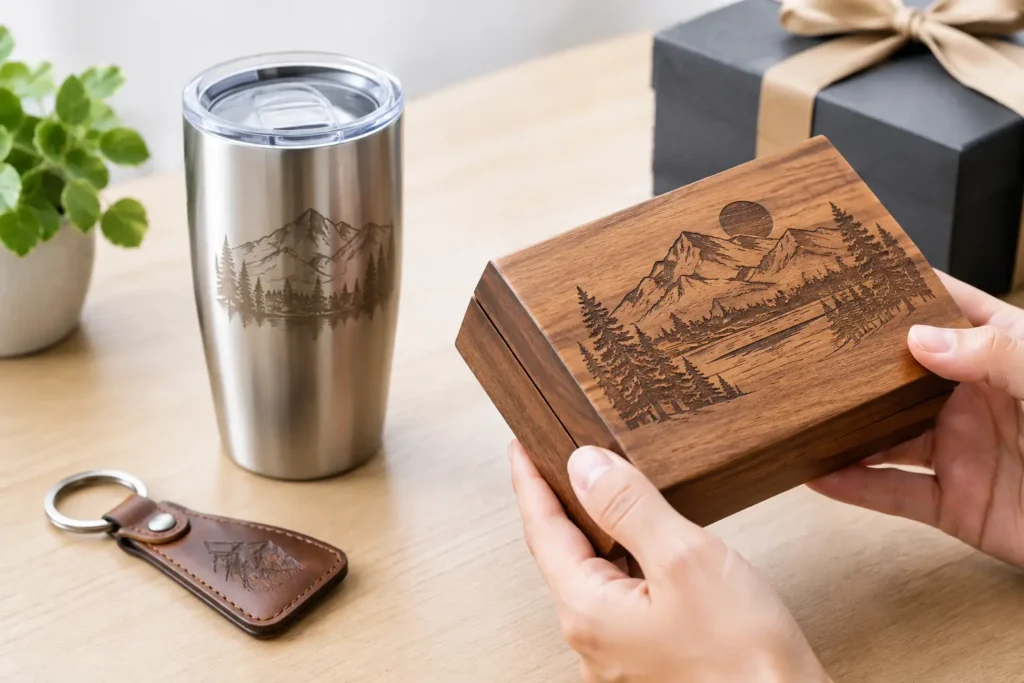
Stainless steel is a popular choice for drinkware, hip flasks and keepsakes because it is durable and easy to care for. Slate gives coasters, signs and serving pieces a naturally textured, characterful finish. Wood has warmth and works particularly well for cutting boards, memory boxes and home gifts, although natural grain and colour variation mean no two pieces will look identical. That variation is part of its charm, but it is worth bearing in mind if you expect a perfectly uniform result.
Glass engraving can look refined for birthdays, anniversaries and wedding celebrations. It should be treated with the same care as any glassware, especially if it is decorative or delicately shaped. Metal keyrings and bottle openers generally suit daily use well, while jewellery may need gentler handling to keep its finish at its best.
Rather than asking whether every engraved product is equally hard-wearing, consider how the recipient will use it. A teacher’s thank-you keyring, a pet memorial slate or a pair of wedding cufflinks each has a different role. Choosing with that role in mind is the simplest route to a gift that feels both thoughtful and well made.
Materials matter more than a long message
A short, well-placed engraving on a good material often looks more polished than several lines of text squeezed into a small area. Before ordering, think about the available engraving space and what the recipient will appreciate most. Names, initials, dates and a brief message are usually easy to read and timeless.
For a milestone birthday, a name and birth year might be enough. For an anniversary, initials with the wedding date can be quietly meaningful. A new baby gift may suit a name, date of birth and weight, while a memorial piece may call for a more personal line. The right wording is not always the longest wording.
Font choice matters too. Decorative script can be lovely for names and romantic occasions, but a clean, simple typeface is often easier to read on smaller products. If an item allows a preview, use it carefully. Check spelling, punctuation, capital letters and dates before placing the order, as personalised products are created specifically for you.
Signs of a well-finished personalised gift
When shopping online, product photographs and descriptions help you understand what to expect. Look for clear information about the material, dimensions and personalisation options. These details are especially useful when comparing products that appear similar at first glance.
A good product listing should make the size clear. A large engraved chopping board has room for a family name or recipe-style design, while a compact keyring needs simpler wording. It should also explain whether natural variation may occur, particularly with wood and slate. Being upfront about these characteristics is a useful sign that a seller understands their materials.
It is also worth considering the details around the product. Is there clear guidance on how to provide personalisation? Are dispatch and delivery times easy to find? Is help available if you have a question before ordering? For a custom gift, confident customer service is part of the experience. It gives you a chance to check a design, confirm a deadline or ask which item is most suitable for your occasion.
At Bespoke Engravers, the aim is to make choosing a personalised gift straightforward, whether you are buying a small thank-you present or planning gifts for a whole wedding party. A broad choice is useful, but clear product information and thoughtful personalisation are what help you order with confidence.
Choosing quality for the occasion
The occasion can guide both your budget and the kind of item that will mean the most. For example, an engraved pint glass, bottle opener or slate coaster makes a practical Father’s Day gift that can be used and enjoyed regularly. A personalised photo frame or jewellery piece may suit Mother’s Day, a new home or an anniversary, where sentiment is central.
For weddings, matching gifts for bridesmaids, groomsmen, parents or the happy couple create a sense of occasion without needing to be identical. Engraved cufflinks, keepsake boxes, glassware and wooden signs all offer different ways to mark the day. The key is consistency: choose a similar style of wording, date format or design so the gifts feel considered as a set.
Teacher gifts and colleague leaving presents work best when they are useful as well as personal. A pen pot, keyring, coaster or small plaque can carry a warm message without becoming overly formal. For pet owners, a personalised memorial item or photo keepsake can be especially meaningful, so choose durable materials and take extra care over names and dates.
How to look after engraved gifts
Care instructions vary by material, and following them helps an engraved present remain a keepsake. Wooden boards and boxes benefit from being kept dry and cleaned gently rather than soaked. Slate can be wiped with a damp cloth and should be handled with care around its natural edges. Glassware should be washed according to the product guidance, while engraved jewellery is best kept away from harsh chemicals, perfumes and unnecessary moisture.
For items used outdoors, such as garden signs or memorial plaques, check that the material is suited to external conditions. Weather, sunlight and frost can affect different surfaces over time. If an item is intended mainly for display, placing it somewhere protected can help preserve its appearance.
A thoughtful gift starts with a thoughtful choice
Engraved gifts are good quality when their materials, workmanship and personalisation are suited to the moment you are marking. Choose a product the recipient will genuinely use or enjoy displaying, keep the message clear and meaningful, and allow enough time for a personalised order to be prepared and delivered. The result is not simply an item with a name on it, but a small reminder of the person, place or occasion behind it.
